Welcome to Your New Bank - The Bank of Self-Esteem
This week’s blog, is all about recognising your skills, sharing your knowledge and growing your confidence.
In the AMP Club, we’re trialing a new session called Skill Swap Shop — a space where members can share what they know and learn from each other.
Why? Because so many neurodivergent creatives underestimate what they actually know. We often assume “everyone knows that,” when they don’t. Or we downplay our experience because it doesn’t look conventional. Sometimes we even forget skills we’ve already mastered.
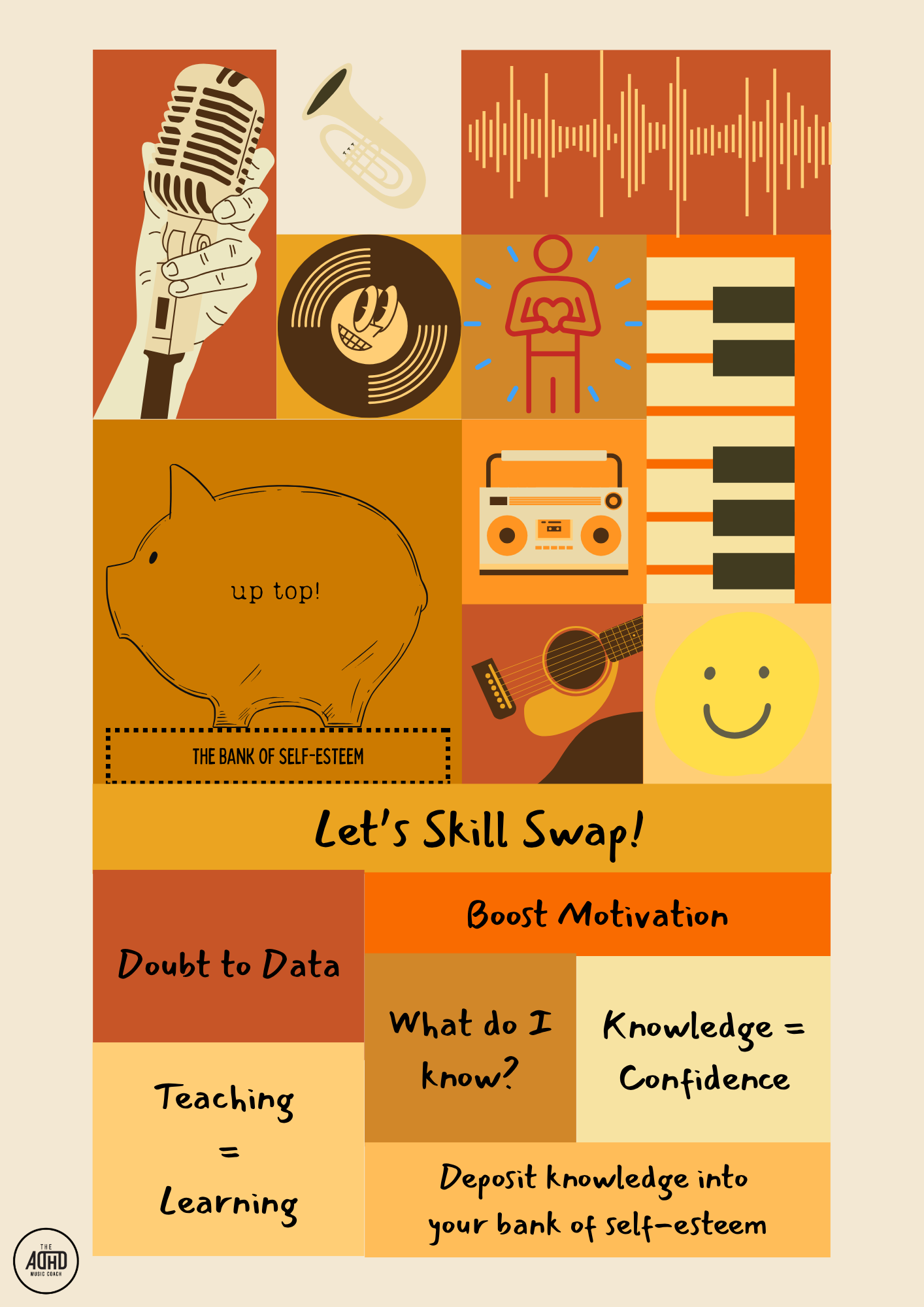
Start depositing some credit into your Bank of Self Esteem. Share and watch your confidence and knowledge grow.
The Science Bit
There’s good neuroscience behind this.
Teaching others strengthens your own learning — psychologists call this the “protégé effect.” When you explain something to someone else, your brain engages multiple areas at once: language, visualisation, sequencing, and emotional memory.
That kind of multi-sensory processing helps your brain store the information more deeply. For ADHD and neurodivergent brains, that active, embodied learning also boosts dopamine (motivation) and working memory through novelty and connection.
So every time you share what you know, you’re not just helping others — you’re literally strengthening your own brain’s link to that knowledge. Each share becomes a deposit into your Bank of Self-Esteem.
From Doubt to Data
If you’ve ever thought “I don’t really know anything” or “I’m not good at anything,” you’re not alone.
That’s imposter syndrome talking — and it’s especially common among neurodivergent people, partly because of years of masking, inconsistent feedback, and uneven performance that make it hard to trust our own abilities.
That’s why we start by naming and noticing what we do know.
Every time you recognise a skill, you’re building confidence and turning vague self-doubt into evidence.
What Could You Share?
In AMP Club, we’ll focus on creative, freelance, and neurodivergent topics — but you can use this idea anywhere in your life.
A few possibilities:
Trying out or mastering a plugin
Managing an aspect of your creative business
Getting to grips with your DAW
How to manage networking with a neurodivergent brain
“What I learned when I…”
“What I wish I’d known before…”
“Revisiting…” or “An introduction to…”
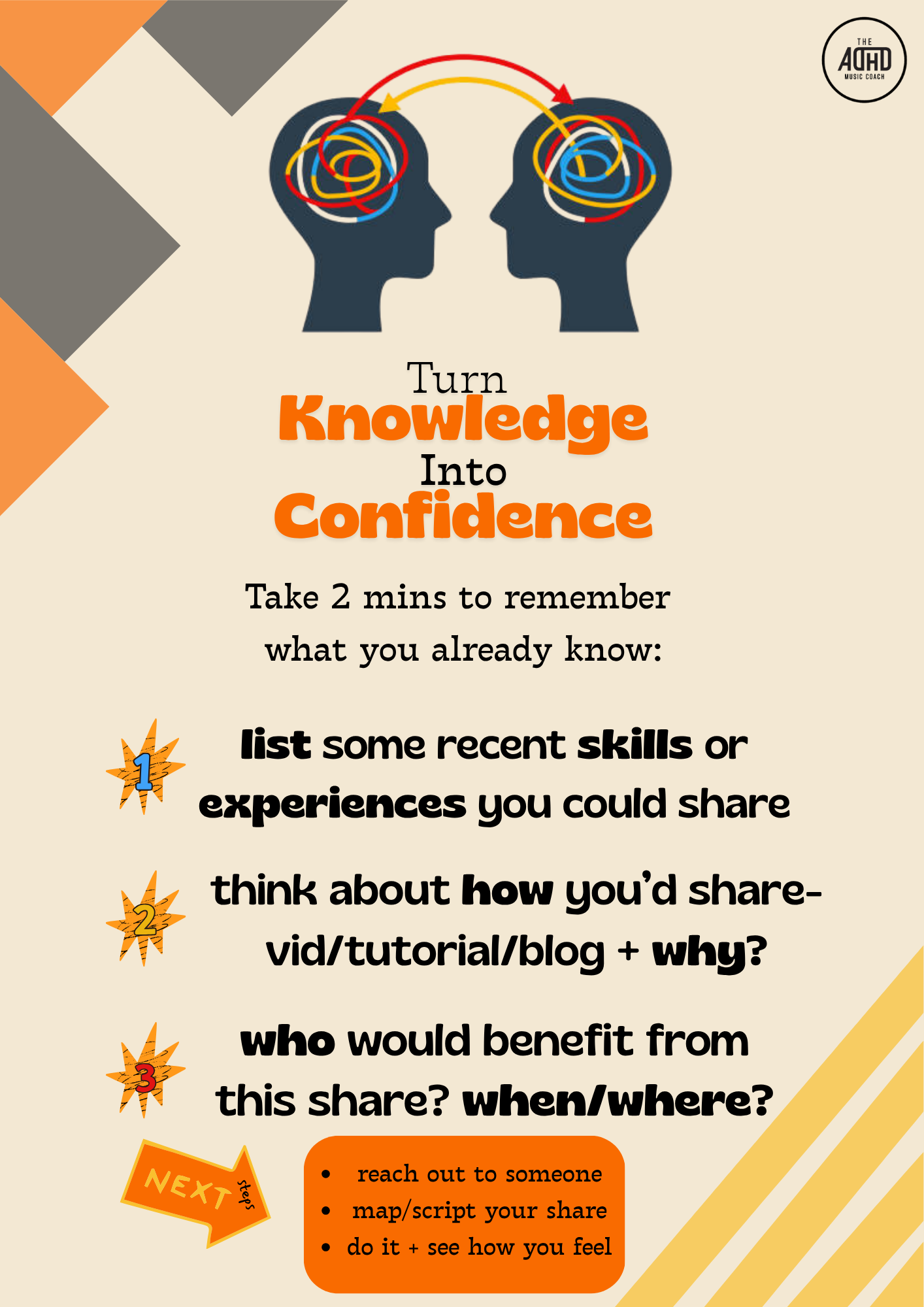
Build your knowledge base to improve your confidence.
Turning Knowledge into Confidence
There are three simple ways to start using this idea:
1. Solidify new learning
After a course or workshop, make a short 5–15-minute video or presentation sharing what you learned.
It’s a great way to lock in that knowledge and keep it visible.
2. Boost motivation
If you’ve been meaning to learn something new, make your goal to teach it to someone else afterwards.
Dopamine loves a deadline — and purpose helps keep the motivation going.
3. Build confidence for interviews or performances
When you name what you know, you create a record of evidence.
That helps shift you out of the “I don’t know anything” mindset into a grounded sense of “I can do this.”
Your Turn
Ask yourself:
What do I already know?
What’s interesting about it?
What might be helpful for others?
How could I share it — video, post, blog, demo, Canva slides?
What outcome do I want for my audience?
When will I do this, and how will I stay accountable?
Each time you share something you know, you make a new deposit into your Bank of Self-Esteem.
And over time, those deposits grow — into confidence, connection, and creative momentum.
If you’d like to join the Skill Swap Shop you can sign up for a free week trial of The AMP Club by signing up to the newsletter here:
