
Welcome to Your New Bank - The Bank of Self-Esteem
What if your confidence worked like a bank account- one you could top up by sharing what you know? In this week’s AMP Club blog, we explore how teaching others boosts learning, motivation, and self-esteem for ADHD and neurodivergent creatives.
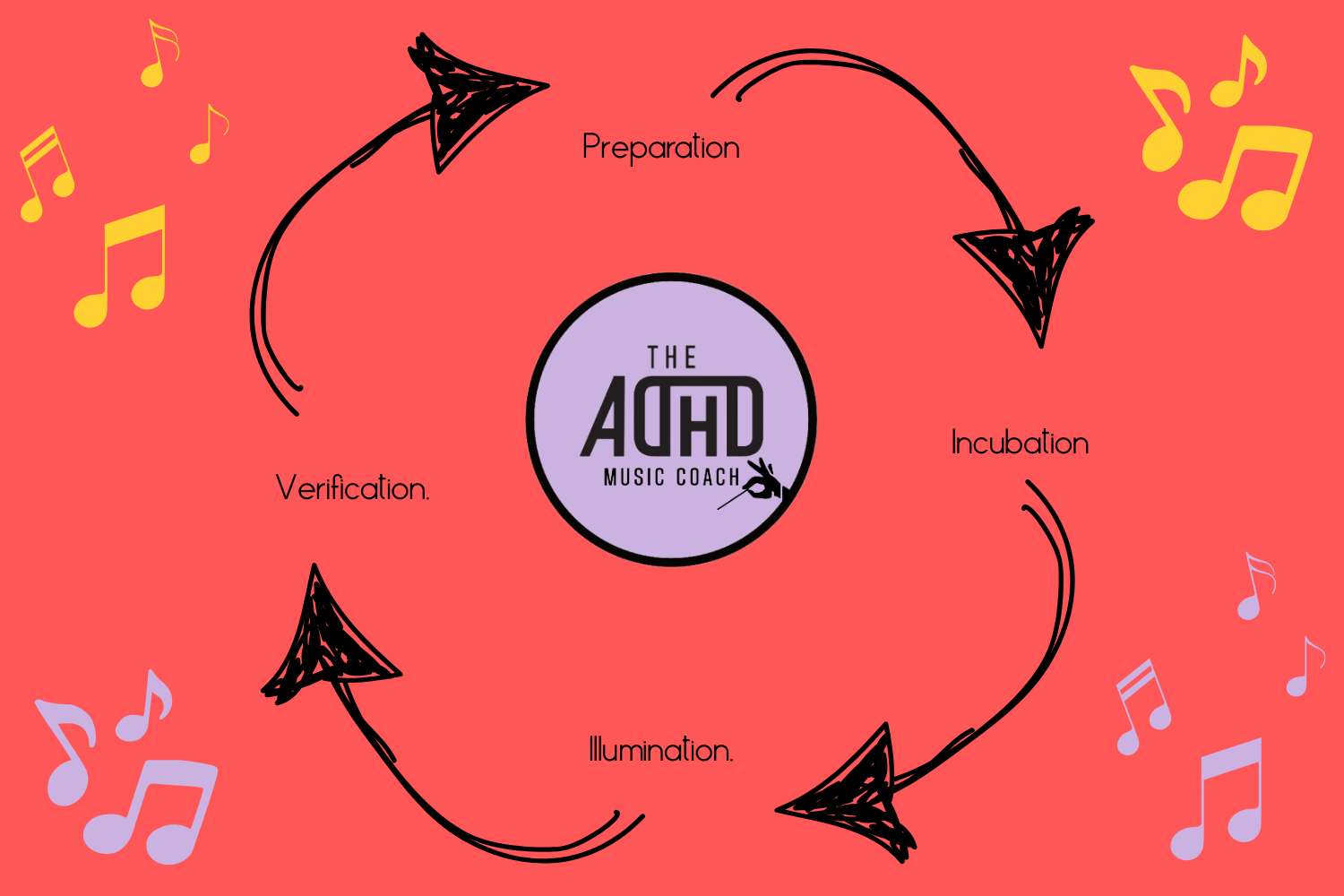
The 4 Phases of Creativity
Creativity does not flow in a straight line—it moves through phases. Psychologists call them Preparation, Incubation, Illumination, and Verification. For most people, these stages form a cycle of gathering inspiration, letting ideas simmer, experiencing the “aha!” moment, and then shaping those ideas into reality. But for ADHD brains, the cycle often looks very different: floods of ideas arrive all at once, incubation is fast-tracked or skipped, and the hardest part is usually finishing rather than starting. The good news? Understanding where the sticking points are makes it easier to build tools, habits, and support that help creativity turn into completion.

Are You Any Good at Endings? (Because I’m Not)
I’ve never been great at endings. Give me the second part of a trilogy any day—where the stakes are high but the story hasn’t wrapped up. No heartbreak, no closure, just the comfort of being in the middle.
But real life doesn’t let us skip to the last page. Endings are inevitable, and for ADHD brains, they can hit harder than we expect shaking routines, stirring emotions, and leaving us unsure how to sign off. Whether it’s wrapping up a creative project, saying goodbye to a collaboration, or stepping away from something awkward, endings demand more brain energy than we sometimes have to spare.
The good news? We can build small rituals that make them less jarring learning to name the moment, mark it, and find our own version of “done enough.”