New Year, New View: Inviting Self Acceptance
If you’ve been following along with New Year, New View series, we’ve spent the last couple of weeks building self-awareness.
So far we’ve looked at things like executive function, spiky profiles and the different ways neurodivergent brains experience the world. Self understanding is foundational to building a different view of yourself that may have been holding you back… but it doesn’t happen in a vacuum.
How you interact with the world around you
We might start to realise the impact of certain environments and contexts on our ability to function; the circumstances where we can be more ourselves or where we might need more energy to mask and get through.
Our ability to be our best selves (and I don’t mean that in the knobby self optimisation way of live forever tech bro’s but more the how can you set yourself up for success more often vibe) is shaped by many things beyond our internal selves- our environments (past, present and future), our use of time, the expectations placed on us and the resources we have access to.
So Week 3 is about inviting self-acceptance and understanding ourselves in context.
Why? Because the more accurately we can pinpoint our needs and preferences and notice our own patterns, resources and assets, the better equipped we are for curating the life we want and need… and becoming the unencumbered version of you. (see what I did there?!)
Looking at the bigger picture
The first exercise in this week’s workbook introduces a Wheel of Life designed specifically for neurodivergent creatives.
Instead of focusing only on work or productivity, it includes areas like:
sleep and restoration
symptom awareness
artist identity and direction
finances and work
play and ideation
networking and collaboration
friendships, family and community
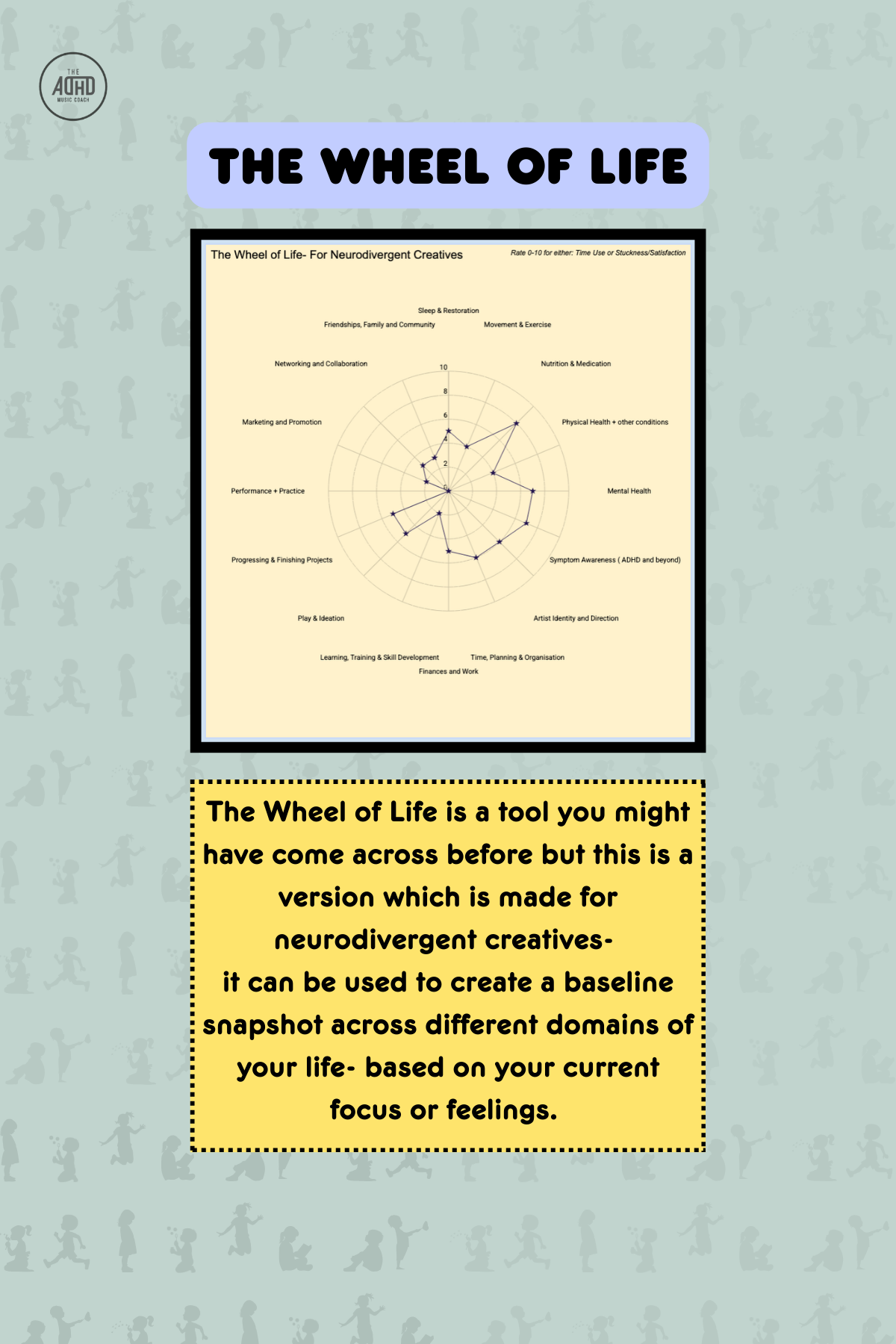
An example of a completed Wheel of Life- Neurodivergent Creatives Edition!
The aim isn’t to judge yourself.
It’s simply to take a snapshot of how your life currently feels across different domains.
Where is your energy going?
Where do things feel stuck or non -existent?
Where are you already supported?
Seeing the whole picture can help us make more realistic choices about where to focus next. And the idea isn’t that you make perfect even numbers all round at all times- the visual shape which is unique and personal to you can show that it is difficult to give equal focus to all aspects of being a creative human being let alone other roles, identities and responsibilities you might have. It can indicate where we feel we are putting our time and energy and where we’d prefer to direct our attention next.
Time and energy
This week also includes a reflection exercise around how you actually experience time.
Many of us plan our lives based on ideal scenarios rather than reality.
Tracking how time feels- whether it passes quickly, slowly or disappears entirely- can reveal patterns we weren’t aware of before.
For example:
what time of day works best for focused work
when creative thinking or practice happens more easily
when social or administrative tasks feel manageable
Understanding your rhythms allows you to work with your brain rather than against it.
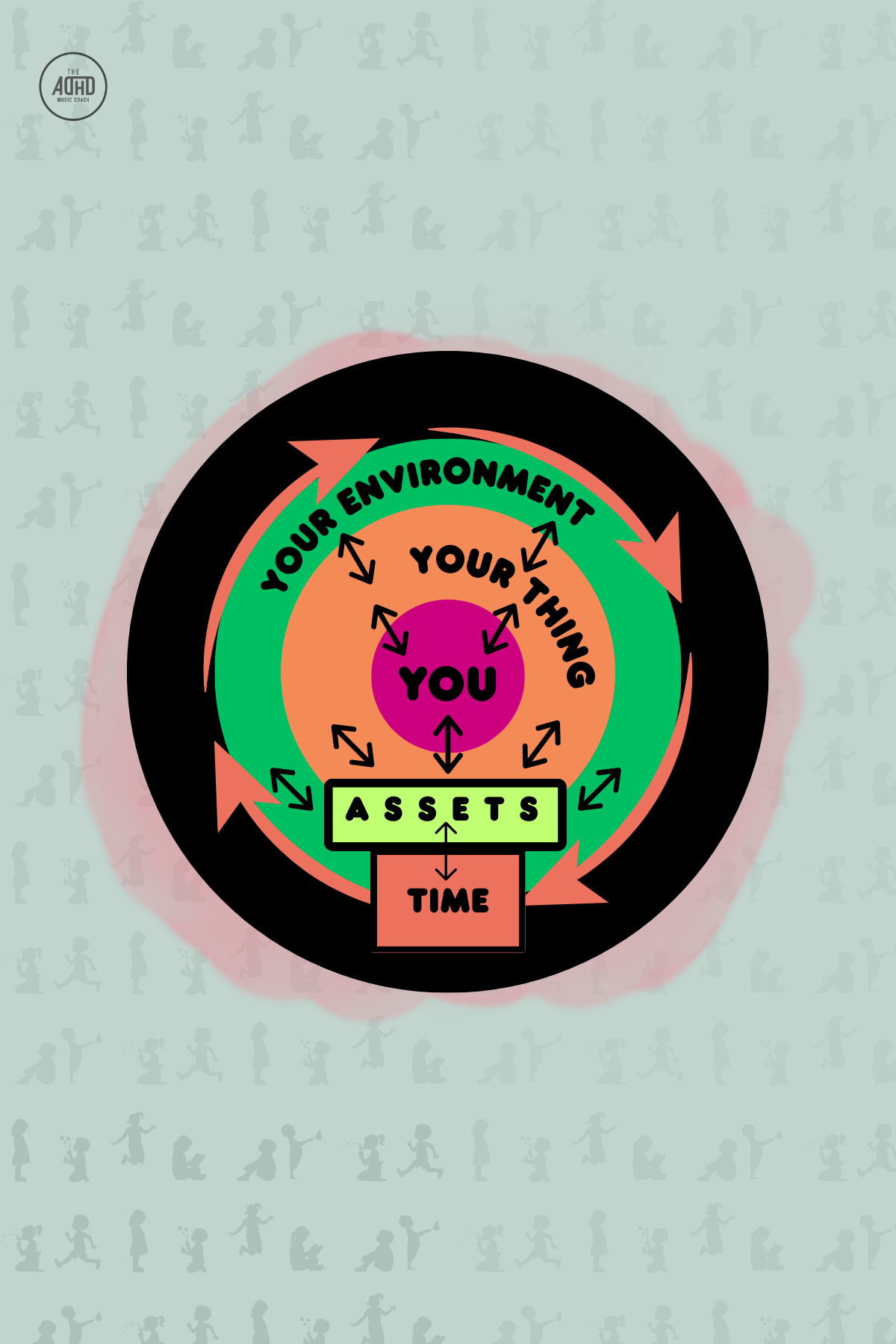
A circular diagram showing the interactions between YOU, YOUR THING (CREATIVITY) AND YOUR ENVIRONMENT including recognising the impact of TIME and your personal ASSETS
Environments matter
Another part of the workbook explores how physical, social and cultural environments affect us.
Environments can be enabling, disabling or somewhere in between.
Things like people, lighting, noise, expectations, safety, community and accessibility all shape how we function.
This section also introduces the idea of intersectionality — recognising how different aspects of identity and experience interact to shape the contexts we move through.
Sometimes what looks like a personal struggle is actually a mismatch between the person and the environment they’re in.
Recognising your assets
Finally, the workbook looks at the resources you already have available to you. In this section ASSETS stands for:
Access
Space
Skills
Equipment
Tools
Support
These might include things like:
communities and memberships
training, education
physical/creative spaces
technology/ instruments/ funding
systems and routines
mentors, advocates or collaborators
Sometimes it’s easy to focus on what’s missing or what we don’t have but recognising what’s already available to you can help you move forward more strategically.
For example, people often want to know how to network or get more opportunities but the truth is you probably already know people or places you could be using or collaborating with and this IS your network which you can build on.
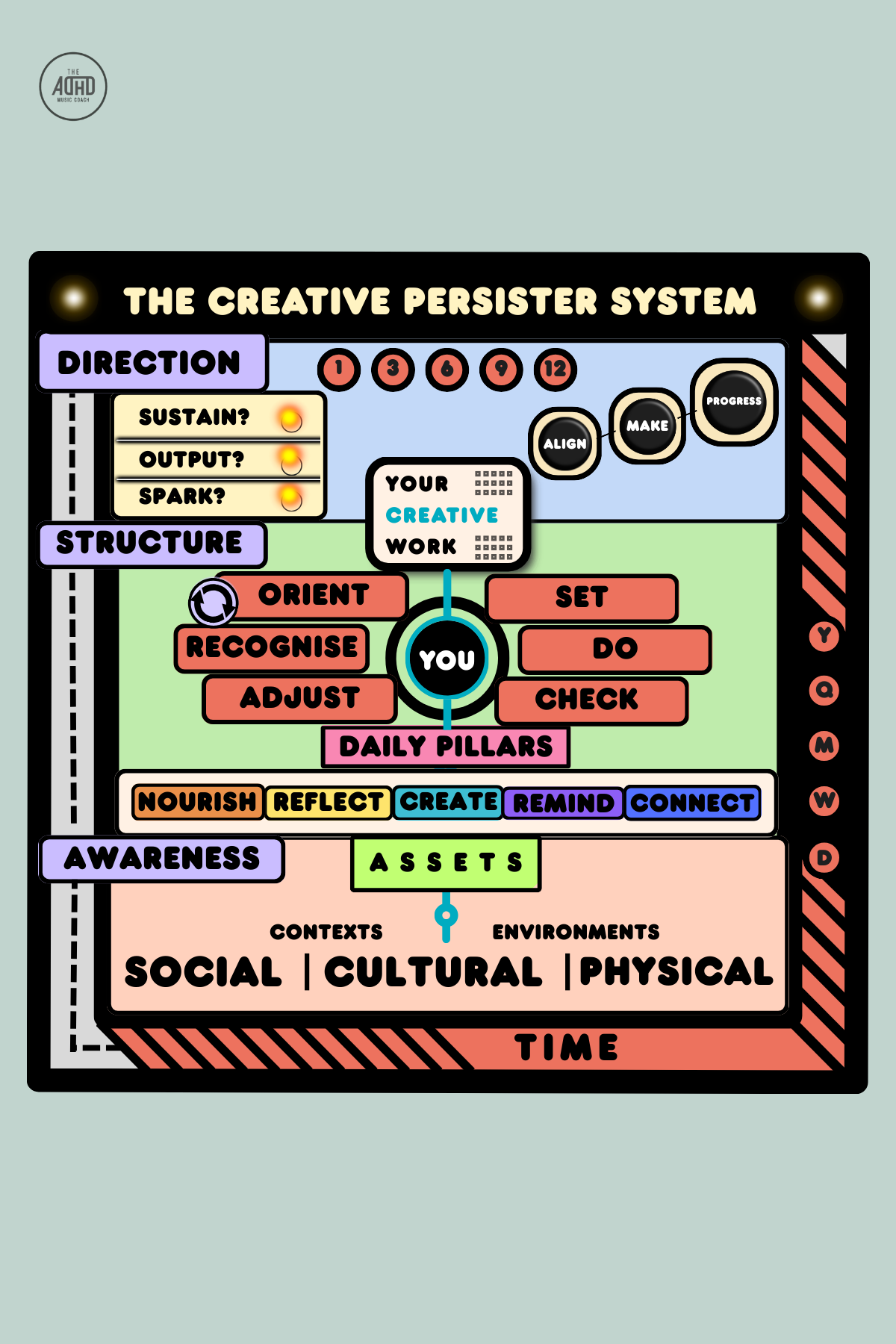
This workbook sits within a wider framework I’m developing called the Creative Persister System- a way of providing some guidance for a more balanced creatively consistent life
Try it yourself
Week 3 of The Unencumbered You workbook is available now.
If you’d like to explore how your time, environments and resources shape your creative life, you can download the workbook below:
