New Year?…New View! Week 2- Building Awareness
Yes, yes. I know it is not technically January and we probably can’t say “Happy New Year!” anymore BUT you know that saying- The best time to plant a tree is 20 years ago and the second best time is… now…?
Well that’s what this 6 week process is about- can we start from where we are now, wherever that is and build something different for ourselves? Not going hard at something and achieving incredible things in that one off now I’ve burnt out kind of way (I know you can do that if you have to) but instead could we get to know ourselves properly and work with who we are and how we actually show up and try living a sustainable, creative life?
In Week 1 of New Year? New View! we started by reflecting on where you are right now and beginning our awareness of who you’ve been… and who you are now you have some knowledge of neurodivergence. Week 2 moves further into understanding.
Many neurodivergent people grow up with the sense that something about the way they think, work, or experience the world is “wrong” without ever being given the language or frameworks to understand it.
This week introduces a few ways of building that understanding and they are not meant to act as prescriptive labels or limitations (people are entitled to their own opinions around whether labels are useful for them or not), but the idea is to use these resources and ideas as tools for self-awareness.
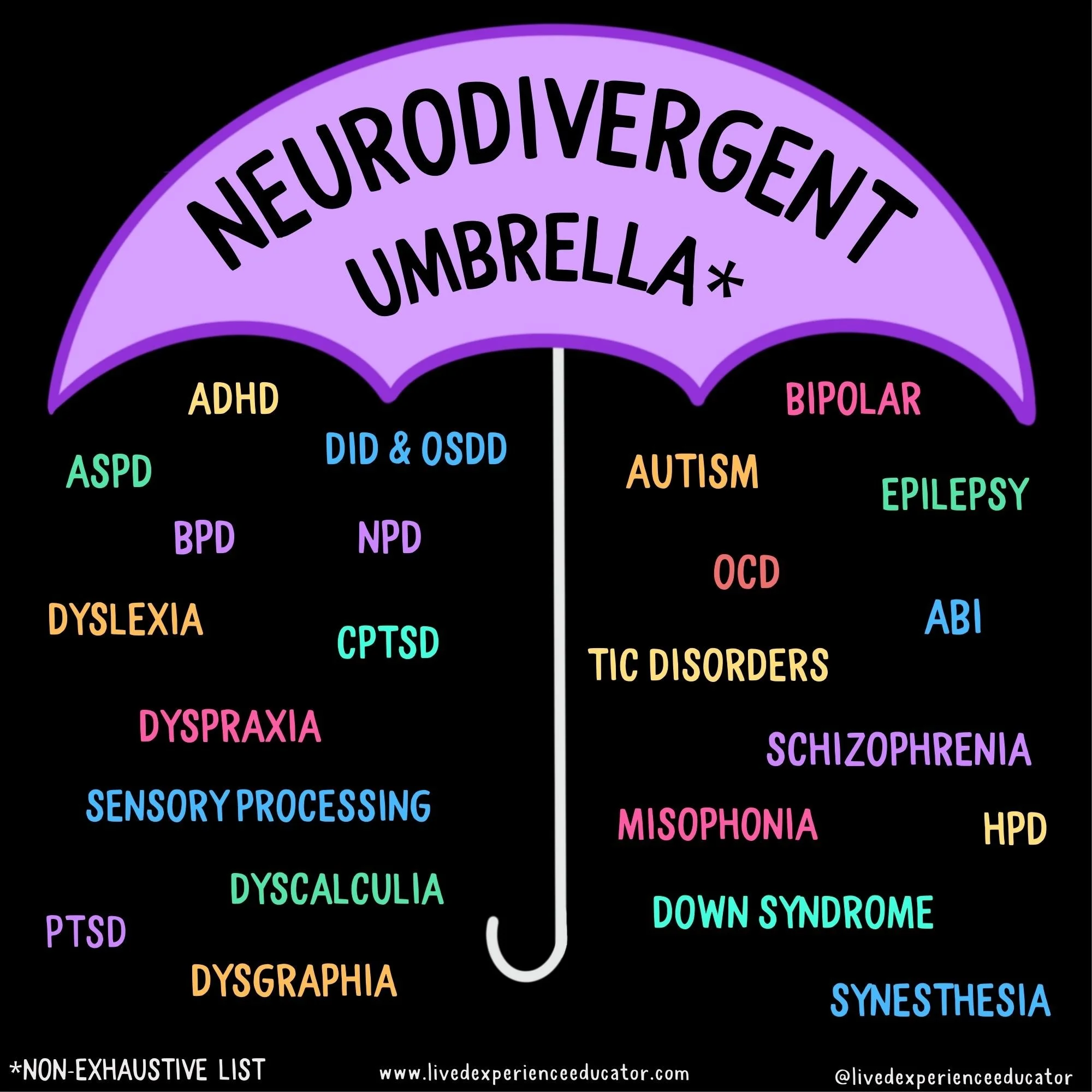
image called Neurodivergent Umbrella from the the lived experience educator
Neurodivergent traits
Neurodivergence includes a wide range of traits and behaviours. In ADHD, for example, these are often grouped into three areas:
Inattention
Difficulty sustaining focus, organising tasks, or following multi-step processes.
Hyperactivity
A sense of restlessness or being constantly “on the go”, which in adults often shows up as mental activity rather than physical movement.
Impulsivity
Acting or responding quickly without pausing to consider consequences.
Understanding these traits can help people recognise patterns in how they approach work, relationships, and creative projects.
Executive function and self-regulation
Another helpful lens for building self-understanding is through exploring executive function skills.
Executive functions are the mental processes that help us manage behaviour and pursue goals. These include abilities such as:
Task initiation
Organisation
Planning and prioritisation
Working memory
Self-monitoring
Emotional regulation
Impulse control
Flexible thinking
These skills rely on underlying cognitive processes such as inhibition, working memory, and cognitive flexibility.
Alongside executive functions sits a broader system called self-regulation, which includes emotional responses, motivation, stress levels, and physical states like sleep and energy.
And yes you guessed it- self regulation is where many ADHDers come unstuck- we might have got used to interpreting an impaired ability to self-regulate and to be aware of what’s going on for us (and to act in a way which is congruent with our needs) with “laziness” or being “weak willed” or “not caring enough”.
We may have even directly absorbed these messages from people around us- the point is when we know our neurobiology is a factor, it can become less about personal failings and instead about where you might need to be more consciously aware and to plan for potential areas of challenge.
Spiky profiles
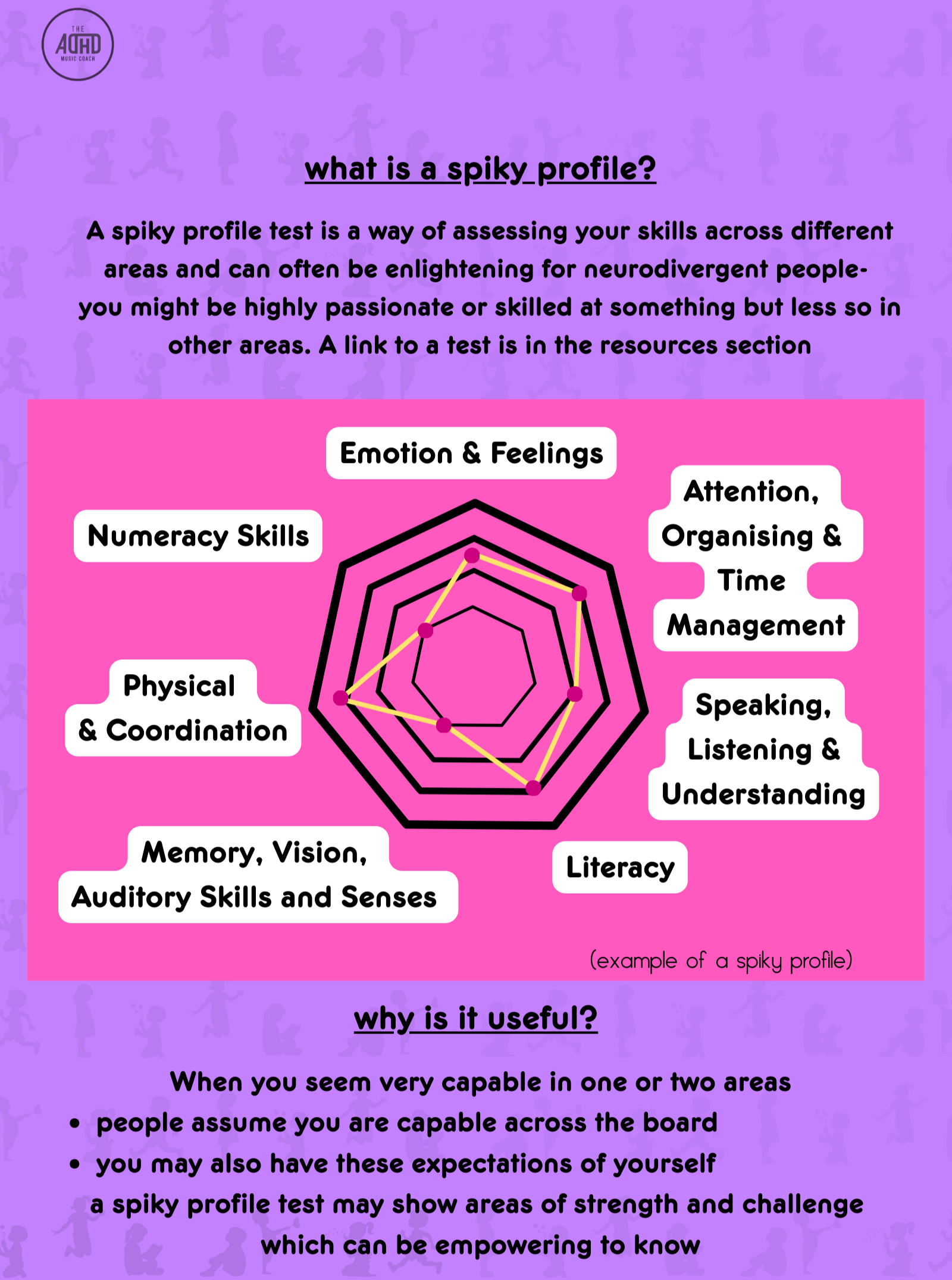
Many neurodivergent people have what is sometimes called a spiky profile.
This means abilities are uneven rather than consistently average across all areas.
Someone might be highly skilled in creativity, problem-solving, or communication while finding organisation, time awareness, or follow-through more challenging.
When people see strong ability in one area, they often assume equal ability across the board. This can create unrealistic expectations from others and from ourselves.
Understanding your own profile can be empowering because it highlights both strengths and challenges.
Strengths instead of self-criticism
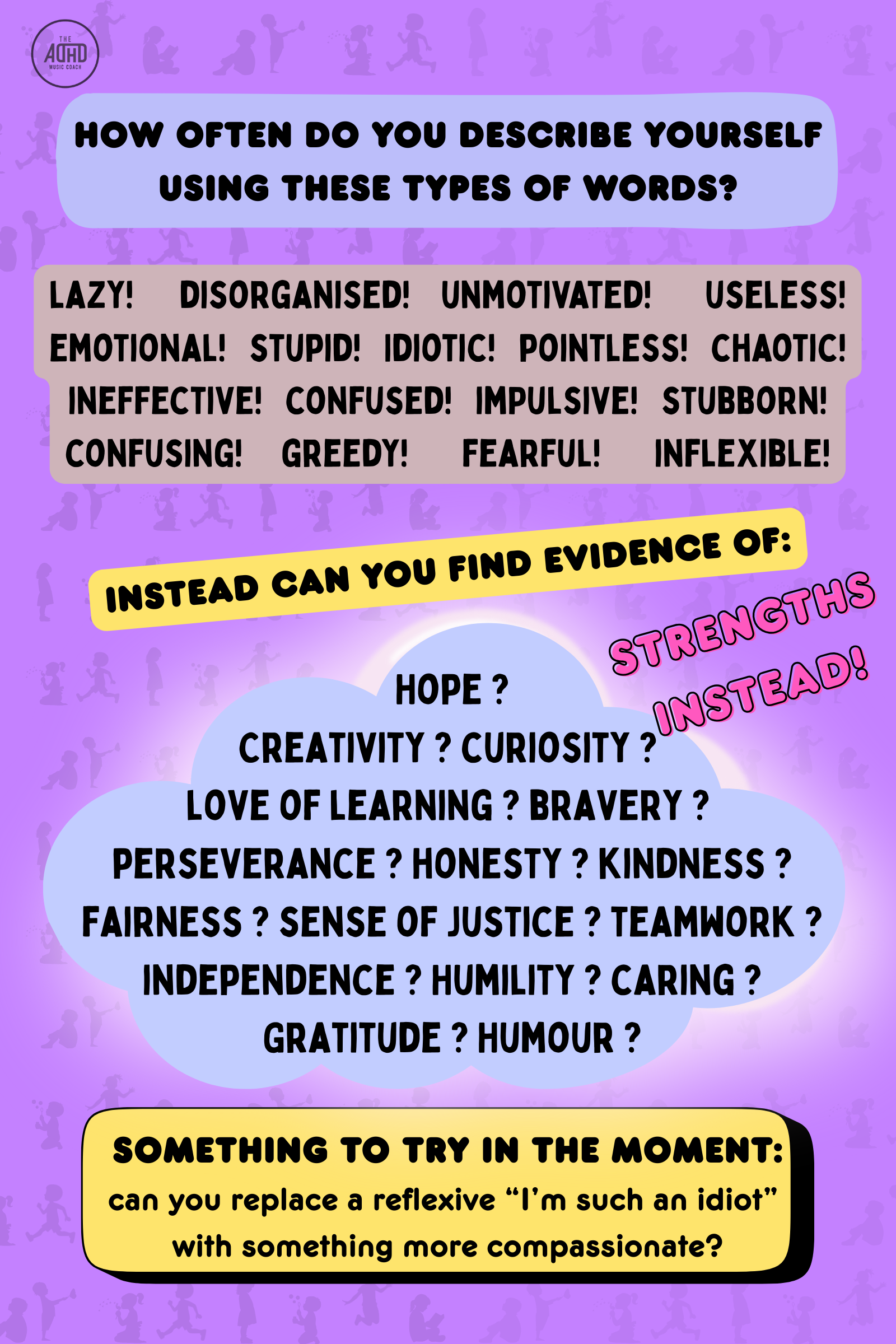
Many undiagnosed neurodivergent people describe themselves using harsh or critical language:
lazy
disorganised
unmotivated
useless
But what happens if we pause and look for evidence of strengths instead?
Curiosity
Creativity
Perseverance
Humour
Kindness
Love of learning
Recognising strengths doesn’t mean ignoring challenges- it just helps balance the (previously distorted) picture. And I am not dismissing how debilitating challenges can feel- believe me- but I do know that when we talk to ourselves unkindly and with un-nuanced judgement we do ourselves a disservice- who else will talk kindly about us and to us?
It feels weird to be compassionate to yourself after years of telling yourself you’re xyz but I promise you it is a key contributor in helping you to build a better relationship with yourself.
How this connects to creative work
The traits and patterns described are not abstract ideas- they often show up directly in how people create, collaborate, and work.
Differences in attention, energy, emotional regulation, or working memory can influence how someone generates ideas, starts projects, responds to feedback, or completes work over time. If you don’t feel good about yourself or your work how can you take the words or actions of others at face value?
Character strengths such as curiosity, persistence, humour, or bravery can also shape how people explore ideas, take creative risks, and continue developing their work. You might find you use humour a lot to get you through or you might be able to recognise you’ve been pretty brave to get to where you are now. Maybe you've been self-deprecating all your life and you fancy trying a different approach?
Understanding your patterns can help you recognise how your particular mix of traits, strengths, and challenges influences the way you approach creative work.
Reflection
Some questions explored in the workbook include:
Where do neurodivergent traits show up most strongly in your life?
What patterns do you notice in work, home life, or relationships?
What strengths might be present alongside challenges?
If you’d like to explore the workbook further, Week 2 is available to download below.
