How to Work Out What Tracks to Release
FYI: Your Next Release Doesn’t Have to Represent Everything you are and ever will be
Some of my clients are at the start of their music journey- releasing music publically might be a very far away idea.
But some neurodivergent music creators have developed such a backlog of tracks that they don’t know what to do with them and can end up sitting on ep’s and albums worth of music without them ever seeing the light of day.
You might have:
too many songs and too much emotional history attached to all of the
too many versions
too many almost-finished ideas
Add perfectionism into the mix and choosing what to release can start to feel risky. As if there’s a wrong answer and the decision you make now says everything about your ability, your taste, and your future as an artist.
For a lot of people, especially neurodivergent artists, this isn’t just a creative decision- it’s a decision-making overload problem. And it can feel easy when it comes to deciding what is not to make it.
Let’s break down some of the common issues I see with music to work on or release next and how we can make it easier to navigate:
When everything you’ve made feels important
Your tracks might be consumed by others in isolation (thanks, streaming!) but this music came from you, you wonderful unique human being- so for you they might evoke:
the time of year you wrote them
what you were going through
how long they took to write/produce/finish
how many versions you made to get to this point
who you might have collaborated with/what instruments/content you used
and so on…
That’s why “just pick the best one” doesn’t help. The “best” to you might be the 9 minute number you made of some cathartic wailing… which, while powerful for you might not resonate with many others- is a different track “better”? Who says?
So instead of asking which track is best, it helps to ask a different question.
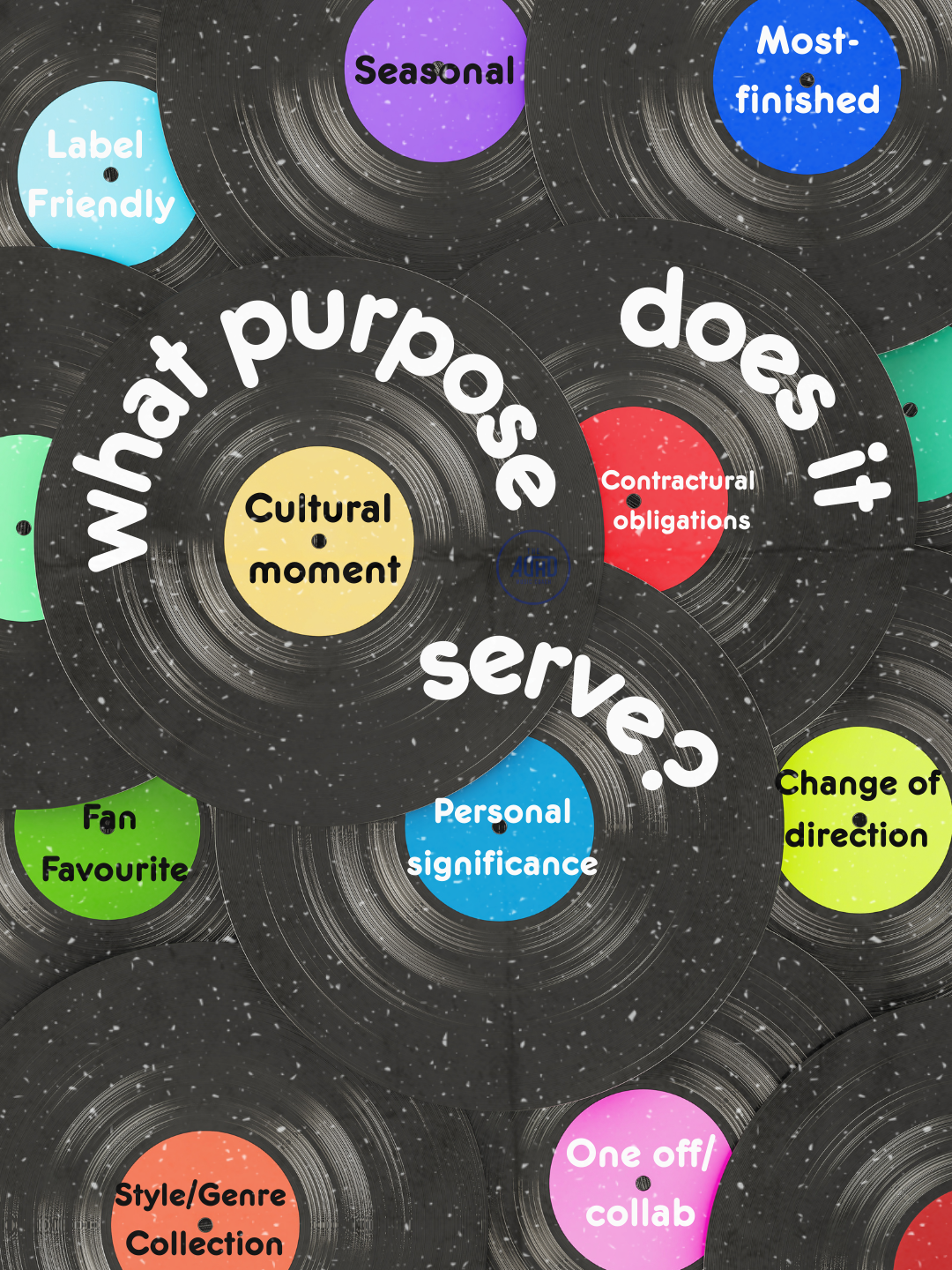
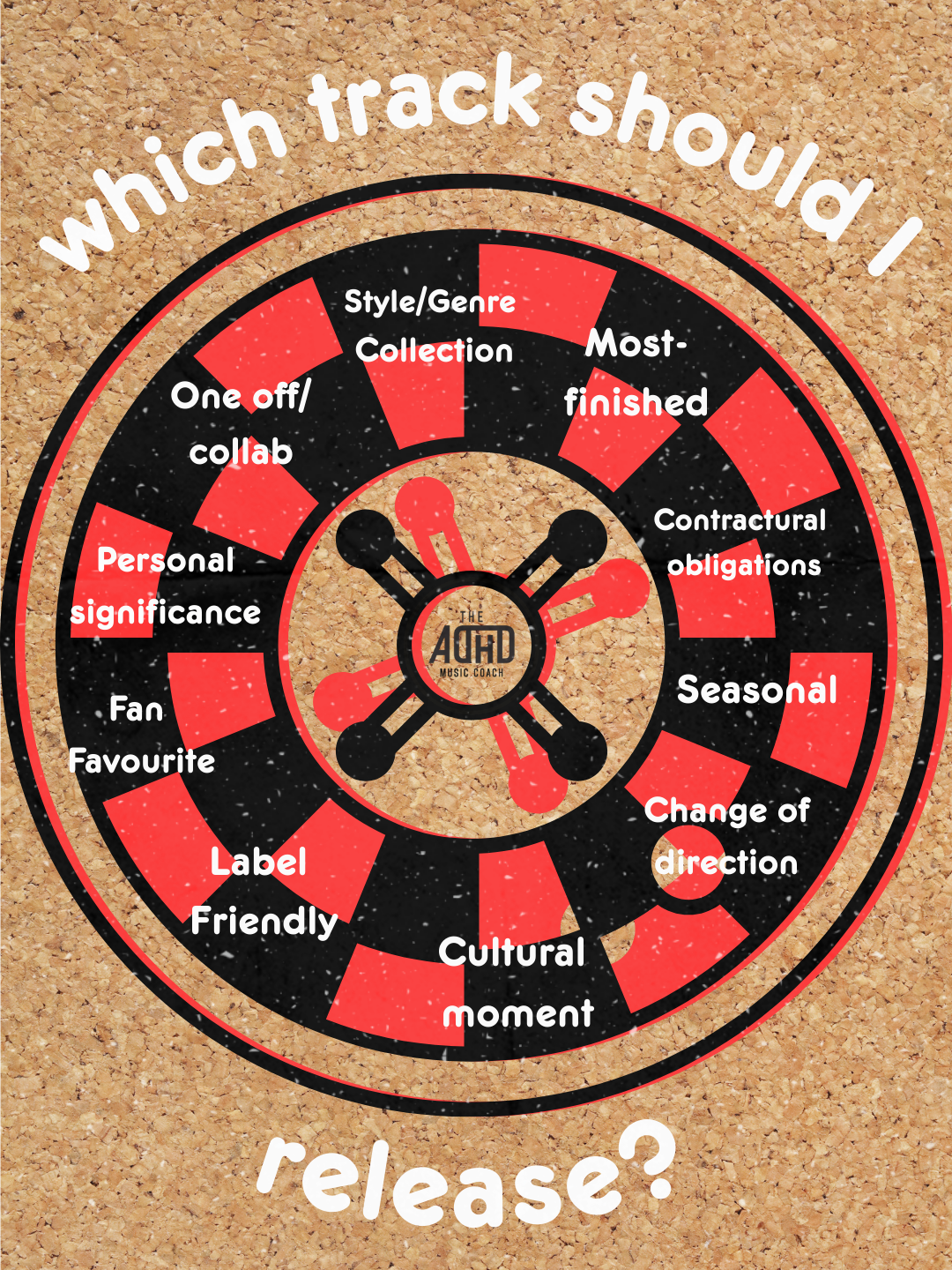
What is this track actually for? What purpose does it serve for you right now?
Not what it represents forever.
Not whether it proves anything/everything.
Just: what job does this track need to do right now?
That question creates a bit of space. It allows different reasons to exist without ranking your work or turning the decision into a judgement.
Why this decision is often harder for neurodivergent creatives
Choosing what to release is especially tricky if your brain struggles with time, prioritising, and emotional attachment, people pleasing behaviours, fluctuating self esteem… the list goes on.
Our divergent brains can see patterns and pathways that others can’t and there is always a truth in there somewhere- for example it IS possible if you make a donk track and you later decide to release a classical metal album that some people who like one won’t like the other- and perhaps we can even sense that before export our first track from our DAW. The problem comes when the many thoughts and possibilities then stop us from progressing with our music because we feel paralysed in indecision and don’t know what the right decision is- because there isn’t one.
If all your tracks feel meaningful, unfinished, and full of potential, it becomes hard to rank them so perhaps the one that is most finished is the one to start with. External factors like timing, resources and capacity can also be judgement factors.
A helpful thing to remember is just because we are making something now does not mean this one piece or collection needs to define us forever.
We can think of it as a snapshot of where your art is at that moment in time only- then it’s possible we can feel less judgement over it.
Choosing one can feel like rejecting the others or that you’re saying you think one song is better than another when that can feel impossible to know. A useful counter-balance here is reducing the decision to a choice of order, not importance. Which track will you choose for now?
You’re not choosing the track. You’re choosing a track to go first.
Time blindness and “everything is now”
When it’s hard to feel the future, every release feels permanent.
This is where thoughts like:
what if this defines me
what if this is the wrong one
what if I waste my chance
start to creep in.
The counter-balance is deliberately zooming out.
This is one release in a longer arc, even if you can’t see that arc clearly yet.
The Comparison freeze
The “someone’s already done this” thought often shows up here.
Not because it’s true, but because your brain is very good at pattern-matching and influence-spotting. Your own work feels familiar to you, so it’s harder to hear what’s distinctive about it.
Originality doesn’t need to be solved and shown with one track- it can accumulate over time.
What actually makes a track a potential choice?
Some useful signals:
the core idea is clear
the emotion holds together
the production is good enough to sit alongside your other releases
there’s a vocal, hook, or musical moment that carries it
it feels intentional rather than accidental
it fits where you’re heading or where you’re at now
How to shortlist without spiraling
If you can, set up a specific listening window to shortlist rather than dipping in and out.
notice which tracks pull you back in without effort
remove the ones you already avoid opening- just for now
look for compelling energy rather than clever complexity
if anyone has heard demos, notice what they reacted to without over-analysing it
You’re not ranking your work and it’s not a value judgement on you as a person or an artist forever. Try to end this stage with three tracks, not ten.
What your ND brain might need during this process
This is harder if you rely on your brain to hold everything at once.
Often it helps to:
write your criteria down so you’re not constantly re-deciding
take breaks between tracks so emotions can settle
separate listening from editing
set a time limit to keep perfectionism contained
involve external ears only if they’re trusted and specific
More opinions don’t automatically create clarity- be aware if seeking feedback- and be clear about what stage your track is at (eg. rough draft, ready to master) and what feedback might be helpful to you at this stage.
Deciding what to release first
Once you’ve narrowed things down, the decision can be simpler.
You might choose:
the track with the least emotional baggage
the one you actually want to perform
the one that represents who you are now, not who you were when you started it
the one that makes you feel a small flicker of excitement about releasing it
the track that brings imagery to mind for visuals/cover art/promo
And the rest of the tracks?
They don’t disappear.
Some will:
get parked for later
be reworked into something new
feed future ideas
stay private
Not everything you write needs to be released to have done its job for you on your creative journey.
Writing music and releasing music aren’t the same thing, even though they often get treated as if they are.
Releasing is about direction, not perfection
Every release points somewhere.
It doesn’t need to explain everything you are or everything you can do. It just needs to move you forward, even slightly.
If a track helps you do that, it’s probably enough.
