All I want for Christmas is… To Not Burnout
People often talk about burnout. I have even completed coaching training specifically on burnout. But what does it actually mean, and why is it the unwanted gift you might end up with for Christmas?
This time of year pulls on every possible lever at once, so it makes sense that burnout risk rises fast.
Festive Season can spike potential burnout for everyone, not only neurodivergent folk. There are multiple social events. You might have to spend time with family members which can be difficult. You might have overbooked yourself. Routine starts disappearing. People and activities that normally offer support are suddenly unavailable. In many western cultures there is a tendency towards excess which can mess with any efforts you have been making to be more moderate. As a primary carer you may have a long list of extra duties to execute (Elf on the Shelf can do one!). Some of these activities are seen as invisible work but they feel anything but invisible when you are the one carrying the mental, logistical and physical load.
On top of all that you still need to source presents, meet work deadlines, juggle the logistics of absolutely everything and somehow stay cheerful while you do it!
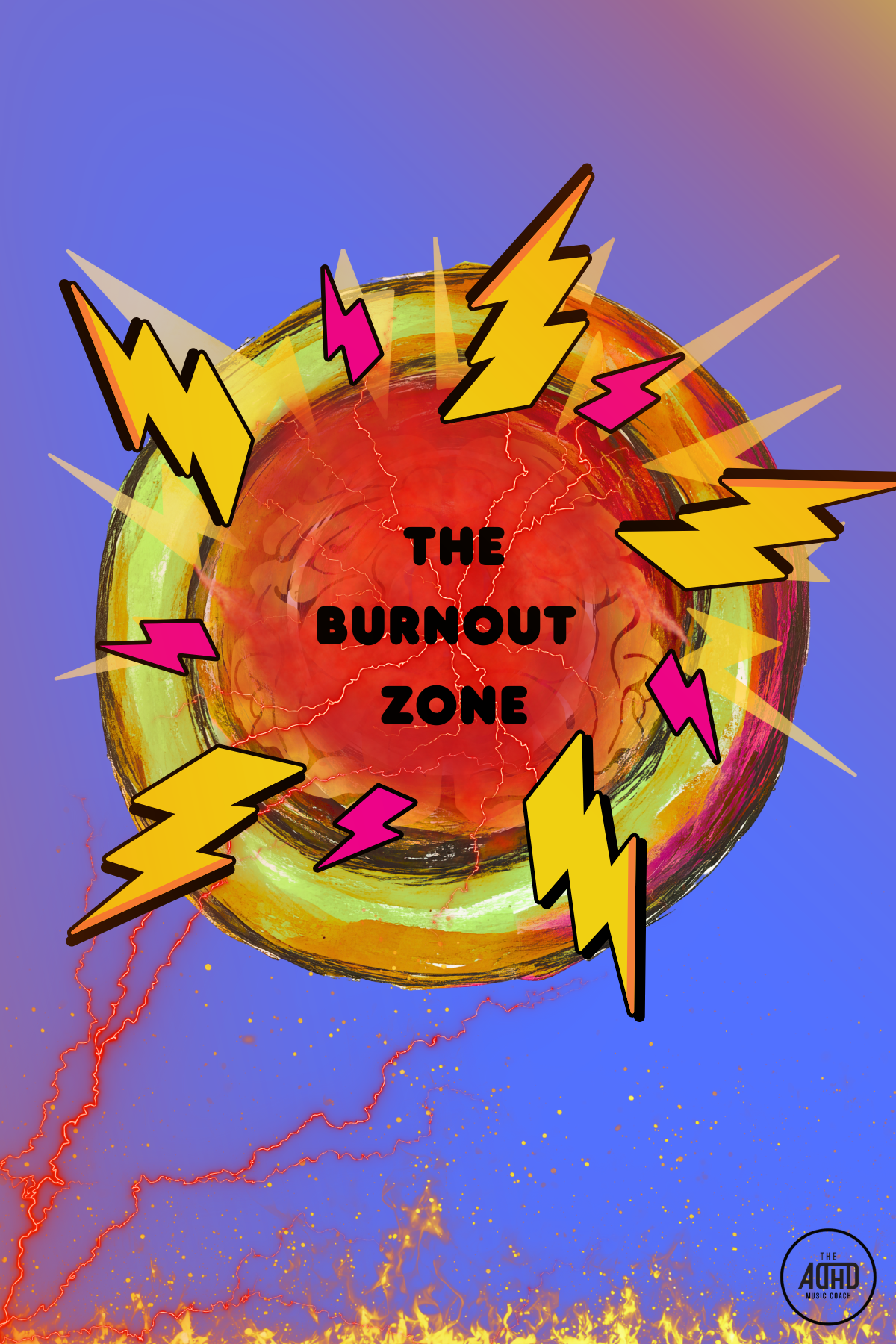
Illustrated burnout graphic with a cracked red centre and lightning bolts surrounding it, with the text ‘The Burnout Zone’ in the middle.
Some signs of burnout creeping in might be:
feeling pushed over the edge easily
shutting down
irritability
brain fog
using substances/alcohol to cope more often
feeling unable to decide anything
feeling emotionally thin
experiencing overwhelm from small tasks
Many of these can appear regularly for neurodivergent people and also for women. So how do you know when you are a bit off centre and when you are heading for a full crash?
My top indicators of a personal burnout episode approaching (or being in mid burn) are:
• I cannot remember the last time I had a shower or bath (more than usual)
• my hair starts to get matted at the back (see above)
• my hair pulling compulsion (Trichotillomania) feels very present
• I snap as soon as someone speaks before I even understand what was said
• everything feels like trying to concentrate with loud background noise
• I want to sit in a dark room far more often
• I feel I should be doing more but instead I sleep more and do less, as if my body has taken over and said “no”
• I feel very internal and find it hard to communicate outward or delegate anything
• I go into minimal functioning survival mode and can only do the next small thing in front of me
• Things increasingly feel like stuff is being “done to me” and I feel frustration, resistance and anger even about things I normally enjoy
• I forget things much more often including events I meant to add to my calendar or where I have hidden gifts- often leading to me rebuying the same thing
What to do about it?
Accept the season
This is a time when many things happen at once. That does not mean you must do all of them. Recognising the volume alone can help you choose what truly needs your attention.
Prioritise with support
Prioritising is difficult for neurodivergent brains and even harder when decision fatigue, sensory overwhelm and low social battery are involved. Go through your upcoming week or month with someone if you can. Talk it out, write a list, or record yourself thinking aloud. Verbal processing can reveal what actually matters to you. Once you have more clarity you can decide whether to arrive late, leave early, change the location or skip something entirely. Do you need to ask for help somewhere?
Avoid overbooking
Optimism tells us there is plenty of time and we can do everything. Reality tends to disagree. Try to stick to only one extra activity a day and keep your personal filter on. What counts as normal for you?
Task batching mode
If you can, group similar activities. Two short meet ups back to back. A collection of errands in the same area. A trip to see a friend followed by a shop you want to visit. It keeps you in the same brainspace and avoids the difficulty of going home (perilously close to your bed/sofa) and losing momentum.
Include something for you
Adding something that is just for you can stop resentment building. I love a solo cinema trip. If I need to go into town for presents, I might plan it around a film. If I want something more soulful I might visit a gallery or a bookshop. You might also want to connect with the spiritual part of your nature in whatever way feels right.
Give or volunteer if you can
Sometimes it helps to reach beyond yourself and offer something to someone else. It can be grounding and meaningful- but only if you are not already overstretched. I have volunteered and donated when possible and it can lead to a sense of connection with your community.
There have also been years when I knew it was not possible for me to support anyone else because I was already depleted. This is completely valid- so please do not overextend yourself. You are allowed to be the one who needs support too.
Big rests and small rests
We often long for a long break but cannot always find the time. Smaller and more frequent rests can help you stay away from burnout. A five minute dark room moment. A short walk. A quiet morning. A full day off if you can schedule it. What matters is that you plan some of these moments in advance so you know they are coming. Knowing helps you get through the busy bits without tipping over the edge.
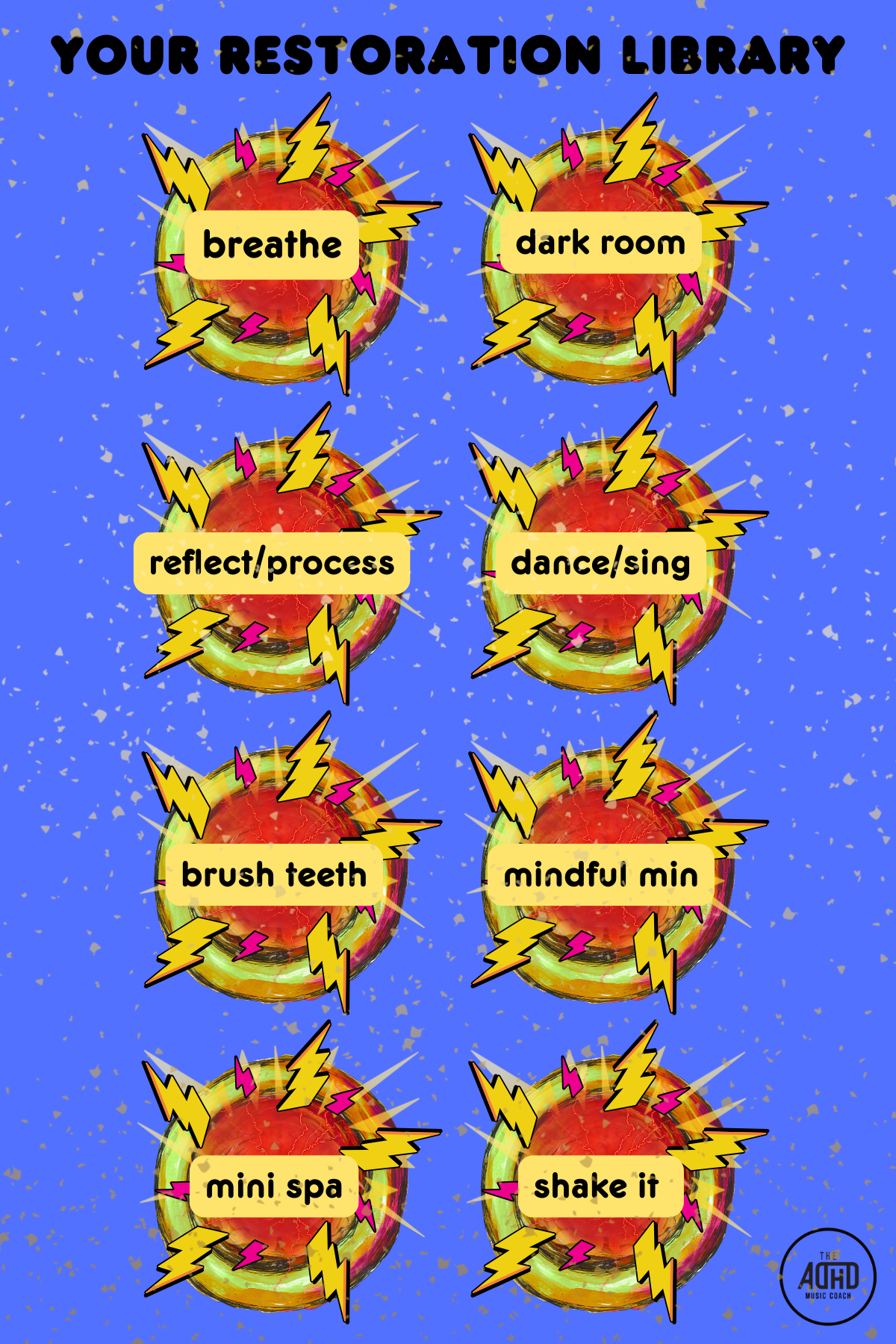
Your restoration library
Even when you cannot rest for long, you can still reach for small restorative activities. These switch your brainspace, help you transition, soothe your system or simply give you a moment to pause. The right activity will depend on what you need in that moment.
Not sure what you need?
Try slow breathing. In for four, hold for four, out for four, hold for four.
Need to switch off?
Three minutes lying down in a dark room. Use earplugs or an eye mask if you want to.
Feeling things?
A couple of minutes writing or talking into a voice note.
Need a lift?
Put on your favourite three minute song and move your body.
Need a lowkey reset?
Brush your teeth.
Got excessive energy?
A few squats or star jumps.
Feeling disconnected?
Stand still for a moment and notice what you can feel, hear, see, smell and taste.
Be your own barista!
Make a fancy drink you really want and take a moment to enjoy it.
Mini spa!
Apply moisturiser on your hands or face.
Have a 1 minute shower.
A gentle shoulder, neck or head massage with some soothing music.
Be like Bert
Dogs shake off discomfort. Shake your whole body for a minute. It is silly but it works.
You don’t have to have this- it’s… a lot
December is both a busy time and a time that is disorientating due to extended periods spent celebrating or with others that might be different from your usual routine. It’s ok to find it a lot- most people do. But there are moments to enjoy as well and we can find them more easily when we are being kind to ourselves and remembering that resting and rebalancing are not an indulgence- but a necessity.
I don’t always subscribe to the “put your oxygen mask on first” tenet because I think in an emergency situation you would act in the moment to save a loved one… however I think it actually works better in this kind of scenario where you have to keep going to reach different events, dates and milestones. In this instance, noticing the signs of burnout and adjusting accordingly is an act of care for yourself which also means you will be more able to participate in things to come- which of course benefits your loved ones too.
So where do you need to create a big/small rest or add in some restoration activities? What can you do for yourself this season? What’s in your calendar that’s playing on your mind- is there anything you can do about it?
Here’s to not getting Christmas burnout this year! Cheers
